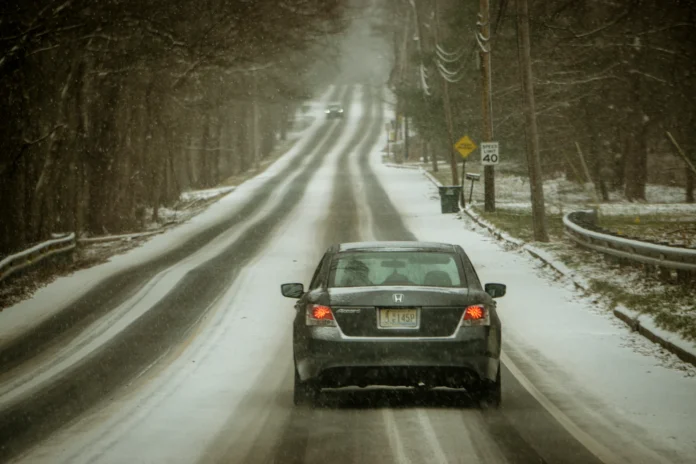

Quick answer: Yes. Ontario car insurance in the US works because the standard Ontario Automobile Policy (OAP 1) covers you for incidents in Canada and the United States. Your liability, accident benefits, uninsured automobile and any collision or comprehensive coverage go with you across the border. Direct Compensation – Property Damage does not: it applies only to accidents in Ontario. And the $200,000 legal minimum can be a thin cushion against a US lawsuit.
November is when many Ontario snowbirds load the car and head south. Here is what your policy does once you cross the border, and where it leaves you on your own.
Does Ontario car insurance cover you in the US?
It does. The standard owner’s policy is OAP 1; its current version is approved for use on or after July 1, 2026. Section 1.2, “Where You Are Covered,” says the policy covers you and other insured persons for incidents in Canada and the United States. It also covers a vessel travelling between ports of those countries.
You don’t need a separate US policy for a vacation drive or a winter stay. But some coverages change shape south of the border.
What changes for Ontario car insurance in the US
| Coverage | In Ontario | In the US |
|---|---|---|
| Third-party liability | Your limit, at least the $200,000 Ontario minimum | Your limit, raised to the state’s minimum if that is higher (OAP 1, s. 3.3.3) |
| Lawsuit defence | Your insurer defends you | Your insurer also defends suits in the US (OAP 1, s. 3.3.1) |
| Accident benefits | Applies | Applies; same territory clause (s. 1.2) |
| Uninsured automobile | Applies | Applies; same territory clause |
| Direct Compensation – Property Damage (DCPD) | Pays for your car when you’re not at fault | Does not apply; only for accidents in Ontario (s. 6.1) |
| Collision, comprehensive, all perils | Only if you bought them | Only if you bought them |
The DCPD row catches people out. In Ontario, if someone else causes the crash, your own insurer pays to fix your car under DCPD. In the US that coverage doesn’t exist. Your car is repaired under your own collision or all perils coverage, or you claim against the other driver’s insurer. If you dropped collision to save money, a crash in Florida that isn’t your fault could leave you chasing a US insurer for the repair bill.
Is the $200,000 minimum enough for Ontario car insurance in the US?
Ontario law requires at least $200,000 in third-party liability, according to the Insurance Bureau of Canada. Section 3.3.3 of OAP 1 says that if you have an accident in a place where the required minimum is higher than your limit, your insurer will honour the higher amount. It also agrees not to use any legal defence that wouldn’t be available if the policy had been issued there.
That promise only lifts your limit to the legal minimum in that state. It doesn’t cover whatever a court there awards. If a judgment goes past your limit, the rest is your personal responsibility. Your insurer will defend you in a US lawsuit (section 3.3.1), but it pays only up to the limit on your Certificate of Automobile Insurance. Many Ontario drivers who travel to the US carry $1 million or $2 million in liability. The cost of moving up from a lower limit is often modest. Ask your broker for a quote before you leave.
The underinsured-driver gap: Florida as an example
The bigger risk may be the other driver’s coverage. Florida’s Department of Highway Safety and Motor Vehicles says Florida-registered vehicles need at least $10,000 in personal injury protection and $10,000 in property damage liability. Bodily injury liability isn’t required for standard private vehicles. If a Florida driver with minimum coverage injures you, there may be little or no liability insurance to pay your claim.
That is the gap OPCF 44R, Family Protection Coverage, is built for. It pays you and your family when the at-fault driver’s liability insurance is below your family protection limit. That limit is the amount shown on your certificate, or your liability limit if no amount is shown. The form decides fault under the law of the place where the crash happened and the amount under Ontario law, so it contemplates crashes outside Ontario. IBC notes it may help where minimum liability limits are low, which describes states such as Florida. Ask your broker to confirm you have it and how your insurer applies it to US claims.
Renting a car in the US with Ontario car insurance
If you fly south and rent a car, your Ontario policy can follow you there too:
- Liability: OAP 1 (s. 2.2.4) extends your liability coverage to automobiles you rent or lease for 30 days or less.
- Damage to the rental: Your policy doesn’t cover damage to a car you rent unless you add OPCF 27, Liability for Damage to Non-Owned Automobiles. IBC says this optional coverage applies only to cars rented in Canada and the United States, not overseas.
Without OPCF 27, you either buy the rental company’s damage waiver or risk paying for damage yourself. Our guide to collision damage waivers and loss damage waivers explains what the counter products cover.
Accident benefits: what your policy pays if you’re hurt in the US
Accident benefits fall under the same territory clause, so they apply to a crash in the US. Under the reforms that took effect in July 2026, FSRA says medical, rehabilitation and attendant care benefits remain mandatory and all other accident benefits are optional. What you can claim after a US crash depends on the options on your current policy. We break down those choices in Ontario auto insurance changes 2026: which accident benefits to keep.
Accident benefits don’t replace travel medical insurance. OHIP pays limited amounts for emergency care outside Canada. That’s up to $400 a day for higher-level inpatient care such as intensive care, $200 a day for lower levels of care and $50 a day for outpatient visits. The Ontario government says it is “essential” to buy travel medical insurance before you leave. See the different types of travel insurance coverage for what to look for.
Proof of insurance: carry the paper copy
Ontario allows electronic proof of auto insurance. FSRA warns that when you leave Ontario, “the requirements for showing proof of auto insurance could be different,” and suggests keeping a paper version as a backup. Put the paper liability card in the glovebox with your Certificate of Automobile Insurance before you cross.
Keeping Ontario car insurance in the US for the whole winter
The standard Ontario policy wording doesn’t set a limit on how long your car can be in the US. But section 1.4.1 of OAP 1 says you must promptly tell your insurer in writing about any significant change you’re aware of. A car that will spend four or five months in another country, with different drivers or a different use, may count. Tell your broker your dates and where the car will be kept.
If a second car stays home in the garage, you may be able to reduce its coverage while you’re away. Our article on how to cancel car insurance in Ontario, and when to suspend it instead explains the options. For the house itself, read snowbird home insurance in Ontario, which covers the absence rules that apply to your home policy.
What to do after an accident in the US
- Get to safety, call 911 if anyone is hurt, and follow the local police reporting rules.
- Exchange names, licence and plate numbers, and insurance company and policy numbers with every driver involved.
- Photograph the scene, the vehicles and any injuries, and get witness contact details.
- Call your Ontario insurer or broker as soon as you can, even if you plan to claim from the other driver.
- Send your insurer any lawsuit papers or lawyer’s letters right away so it can defend you.
The claim works much like one at home; see our guide on how to file a car insurance claim in Ontario.
Checklist before you drive south
- Confirm your liability limit and ask what $1 million or $2 million would cost.
- Check that you carry collision or all perils, since DCPD won’t pay in the US.
- Ask whether you have OPCF 44R Family Protection Coverage.
- Add OPCF 27 if you plan to rent a car.
- Review the accident benefit options you chose under the 2026 changes.
- Buy travel medical insurance.
- Print your liability card and keep it in the car.
- Tell your broker your travel dates and where the car will be.
If you aren’t sure what your current policy includes, start with what coverage you really need for auto insurance in Ontario, then call us to review it before you go.
Frequently asked questions
Does Ontario car insurance cover me in the US?
Yes. The standard Ontario Automobile Policy (OAP 1) covers you and other insured persons for incidents in Canada and the United States. Liability, accident benefits, uninsured automobile coverage and any optional collision or comprehensive coverage apply there too.
Do I need to buy extra car insurance to drive to Florida?
Not by law: your Ontario policy already applies in the US. You should still check your liability limit, your collision coverage and whether you carry OPCF 44R Family Protection Coverage, since those decide how well protected you are after a crash.
What happens if my liability limit is lower than the state’s minimum?
Section 3.3.3 of OAP 1 says your insurer will honour the higher minimum required where the accident happens. It does not pay more than that minimum or your own limit, whichever is higher.
Does Direct Compensation – Property Damage apply in the US?
No. OAP 1 says DCPD applies only if the accident takes place in Ontario. In the US, damage to your car is paid under your collision or all perils coverage, or claimed from the at-fault driver’s insurer.
Will my Ontario policy cover a rental car in the US?
Your liability coverage extends to cars you rent for 30 days or less. Damage to the rental itself is covered only if you add OPCF 27 or buy the rental company’s damage waiver. IBC says OPCF 27 applies to cars rented in Canada and the US.
Are accident benefits paid if I’m hurt in a US crash?
Yes, accident benefits follow the policy’s Canada–US territory. For policies issued or renewed since July 1, 2026, medical, rehabilitation and attendant care benefits are mandatory and other benefits are optional, so what you receive depends on the options you chose.
Does OHIP cover me if I’m injured in a car accident in the US?
Only partly. OHIP pays up to $400 a day for high-level inpatient care, $200 a day for other inpatient care and $50 a day for outpatient care outside Canada. The Ontario government says travel medical insurance is essential.
How long can my Ontario-insured car stay in the US?
The standard policy wording doesn’t set a time limit. You must tell your insurer promptly about any significant change, so let your broker know if the car will spend the winter in the US.
Sources
- Ontario Automobile Policy (OAP 1) Owner’s Policy, 2026, Financial Services Regulatory Authority of Ontario (FSRA)
- OPCF 44R Family Protection Coverage, FSRA
- OPCF 27 Liability for Damage to Non-Owned Automobile(s), FSRA
- Changes to Statutory Accident Benefits coverage in Ontario, July 1, 2026, FSRA
- It’s the law: what you need to know, FSRA
- Mandatory auto coverages where you live, Insurance Bureau of Canada
- Auto insurance endorsements, Insurance Bureau of Canada
- What is covered when I go on a March Break vacation?, Insurance Bureau of Canada
- OHIP coverage while outside Canada, Government of Ontario
- Florida Insurance Requirements, Florida Department of Highway Safety and Motor Vehicles
This article is general information about the standard Ontario Automobile Policy and related government guidance as of November 2026. It is not legal advice and doesn’t change the terms of any policy. Coverage depends on your own policy wording, endorsements and insurer. Speak with a licensed insurance broker about your situation before you travel.